Most advisory firms do not have a prospecting problem. They have a positioning problem that looks like a prospecting problem.
If you are trying to figure out how to find high net worth investors, the instinct is to go looking for a better list, a better lead source, or a better ad. That instinct is expensive and it rarely works, because high-net-worth investors are not found the way ordinary leads are found. They are earned — through a narrow specialty, visible expertise, and a referral network that vouches for you before you ever get a meeting.
There is a second reason the list-buying instinct fails. Nearly every prospect you want already has an advisor. Your job is not to be discovered. It is to be the obvious better option at the moment they start looking.
The good news: the process is repeatable. Below is the framework we use with advisory firms, built around what actually moves qualified assets into the pipeline.
The short answer: how to find high-net-worth investors
High-net-worth investors are found by becoming the obvious specialist for a specific, wealthy problem — then making that specialty findable and verifiable. In practice, that means seven things:
- Narrow your niche to a specific HNW situation you can genuinely own.
- Build search visibility around the questions HNW investors actually type and ask AI tools.
- Earn referrals from the CPAs, attorneys, and business brokers they already trust.
- Turn your website into proof of expertise, not a brochure.
- Use paid media to qualify prospects, not just collect contact forms.
- Build a follow-up system that survives a 9–18 month decision cycle.
- Measure qualified pipeline, not traffic.
Each step compounds. Skip the first one and the other six get dramatically more expensive.
Why the old prospecting playbook is failing
Three things changed at once.
First, the money is in motion. Cerulli Associates projects roughly $124 trillion in wealth will transfer through 2048, with about $105 trillion flowing to heirs and $18 trillion to charity (Cerulli Associates). More than half of that volume — about $62 trillion — comes from high-net-worth and ultra-high-net-worth households that make up only 2% of all U.S. households. That is the single largest concentration of addressable HNW opportunity in modern history.
The concentration is also accelerating. HNW families now hold more than half of all investable assets in the U.S. That is nearly double their share a decade ago (BlackRock, citing Cerulli 2024).
Second, those assets are not loyal. Cerulli has found that more than 70% of heirs are likely to fire or change advisors after inheriting their parents’ wealth (Cerulli Associates). A Cerulli survey of investors with at least $250,000 in financial assets found only 27% of expected beneficiaries planned to keep their benefactor’s advisor — dropping to 20% among those who had already inherited (CNBC). The most-cited reason after already having an advisor was simple: no relationship with the benefactor’s advisor.
Third, almost every prospect worth having already has an advisor. Most prospecting advice ignores this. You are rarely discovered by an unadvised millionaire. You are chosen as a replacement or an addition. PwC found that 46% of HNW investors planned to change or add a provider within one to two years. Another 39% had already switched in the prior three years (PwC High Net Worth Investor Survey). The top driver was not performance. It was personalization. Two-thirds said they wanted more of it.
Read those three facts together. There has never been more HNW money in motion. A large share of it is quietly dissatisfied. So prospecting at this level is not a discovery problem. It is a displacement problem. The firms that win are already visible, already credible, and obviously more personal than the incumbent.
Narrow your niche until it feels risky
“We serve high-net-worth families” is not a niche. It is a description of your revenue goal.
A real HNW niche is a specific situation with a specific financial complexity:
- Business owners planning an exit in the next 24 months
- Physicians with concentrated equity and malpractice exposure
- Tech employees managing an RSU concentration through a lockup
- Widows navigating a horizontal wealth transfer
- Second-generation heirs inheriting a family real estate portfolio
The narrower the situation, the more obvious you become. A dentist with $8 million and a practice sale on the horizon is not looking for “wealth management.” They are looking for someone who has done this exact thing before, repeatedly.
Narrowing feels like leaving money on the table. It is the opposite. Every step below gets cheaper and works better when your specialty is sharp enough to remember.
Then widen the service, not the audience. Most firms get this pairing backwards. Narrow the client. Broaden what you handle for them. Wealthy households are not shopping for a portfolio manager. They are trying to stop coordinating six professionals who never talk to each other: tax, estate, insurance, succession, philanthropy, family governance. Practices built for HNW clients tend to offer a much wider service set. That breadth is what makes displacement possible. Nobody leaves a competent advisor for a slightly better return. They leave for someone who takes the coordination off their desk.
One more layer. State your specialty in terms of the client’s life, not your capabilities. “Business owners planning an exit” is a situation. “Making sure the sale funds your kids’ education, your foundation, and a retirement you enjoy” is what they are buying. Name the outcome behind the money, not the service.
Make your expertise findable — including inside AI tools
Here is what shifted quietly and matters enormously: affluent prospects no longer search in keywords. They search in questions and full paragraphs, and increasingly they ask an AI assistant first.
We see it directly in client search data. Real queries surfacing advisory content now look like this:
- “compare family office services vs private wealth firms for $10m net worth”
- “evaluating wealth management firms track record customized solutions high net worth families”
- “give me a checklist to decide whether to keep using a digital-only solution or engage a private wealth advisor when my net worth surpasses $5 million”
Those are not keywords. They are conversations. Industry observers see the same shift. HNW prospects start with their own online research and AI answer engines. Then they check regulatory records. Only then do they reach out (Haute Wealth).
What to do about it:
- Write the answer, not the ad. Build content that directly answers the decision questions your niche is asking, in plain language, with real specifics.
- Answer the question in the first two sentences. Both featured snippets and AI systems reward content that resolves the question immediately, then supports it.
- Structure for extraction. Clear headings, short paragraphs, comparison tables, and defined terms make your content easy to quote.
- Be consistent everywhere. Your name, credentials, specialty, and firm details should match across your site, bio pages, regulatory records, and third-party profiles. Inconsistency reads as risk.
This is where SEO for advisory firms stops being a traffic exercise and becomes a credibility exercise.
Build the referral network that actually produces HNW introductions
Referrals remain the most common entry point to a high-net-worth relationship — but the referral is the beginning of the evaluation, not the end of it. A referred prospect will search your name before they call you.
Most advisors approach centers of influence backwards. They ask for referrals. The firms that get them do something different: they make the other professional look brilliant.
Practical moves that work:
- Pick three professions, not ten. For a business-exit niche: M&A attorneys, CPAs with closely held business clients, and business brokers.
- Bring them deals and insight, not lunch. Send a client-ready one-pager on a complexity you both encounter. Refer work to them first.
- Co-create something. A joint webinar, a shared checklist, or a co-authored guide on exit planning gives them a reason to keep your name in front of clients.
- Make the handoff effortless. Give them a single link that explains exactly who you help and what happens on the first call.
One CPA who sends you two exit-planning clients a year is worth more than a thousand cold contacts.
Turn your website into proof
A HNW prospect arrives on your site with one question: has this firm handled my exact situation before?
Most advisory websites answer a different question. They explain how long the firm has been in business and how much it values relationships. That is not proof. It is also aimed at the wrong thing — most sites lead with performance and pedigree when clients care about neither.
The evidence here is unusually clear. Wealthtender studied 2,568 advisor reviews written between 2021 and 2025. Eighty-nine percent centered on relationship quality, planning advice, and emotional factors. Just 1 in 10 mentioned investments or portfolio management at all (Wealthtender 2025 Voice of the Client Study). Portfolio competence is table stakes, not a differentiator. Build your site around it and you look identical to every competitor.
Proof looks like this:
- A dedicated page for each niche situation, written in that prospect’s language
- Anonymized case narratives with the actual complexity and the actual outcome
- Your process, laid out step by step, so the first meeting feels predictable
- Client testimonials that describe how you think and how you communicate, not what you returned
- Language that names the goals behind the money — legacy, family, philanthropy, freedom from complexity
- Credentials, regulatory records, and fee structure that are easy to find rather than buried
- One clear next step on every page
If your messaging is not clear before the traffic arrives, more traffic just means more people leaving. That is why brand messaging and positioning comes before campaign spend, not after it. Our deeper walkthrough on attracting high-net-worth clients covers how to build these pages so they convert.
Use paid media to qualify, not to collect
Paid search and paid social can absolutely reach affluent investors. The failure mode is almost never targeting — it is that the offer attracts the wrong person.
“Free portfolio review” attracts everyone with a portfolio. “Exit-readiness assessment for owners selling a business above $5 million” attracts a much smaller number of much better prospects.
Three rules for HNW paid campaigns:
- Match the offer to the complexity. The more specific and consequential the offer, the higher the qualified conversion rate — even at lower volume.
- Bid on decision intent, not category terms. Comparison, evaluation, and “should I” queries convert. Broad category terms burn budget.
- Judge campaigns on qualified appointments and closed assets, never on cost per lead. A $600 lead that becomes a $4 million relationship is a bargain. A $40 lead that never qualifies is pure waste.
Paid media works best when it amplifies an already-working funnel. If the site does not convert organic visitors, ads will not fix it — they will just make the leak more expensive. Our overview of how marketing channels reinforce each other explains where paid fits in the sequence.
Build follow-up that survives an 18-month decision
A $10 million prospect does not fill out a form and sign next week. The evaluation window usually runs 9 to 18 months. It includes a spouse, often adult children, and the family’s CPA and attorney.
Firms lose these opportunities by going quiet after two emails.
What a durable follow-up system requires:
- A CRM that tracks the whole household, including heirs and the professionals in the family’s orbit
- Sequenced value, not check-ins. Send the tax-law change that affects their situation. Send the exit-planning checklist. Never “just following up.”
- Segmentation by situation, so a pre-exit business owner never receives content written for a retiree
- A defined re-engagement trigger — a liquidity event, a market move, a policy change — that gives you a legitimate reason to reappear
This is also the retention answer to the wealth-transfer problem. Advisors who are already known to the next generation do not lose the assets when they transfer. Advisors who never met the heirs usually do.
Measure the metrics that predict HNW growth
Traffic and impressions are diagnostics, not results. For HNW prospecting, track:
| Metric | Why it matters |
|---|---|
| Qualified discovery calls per month | The only true top-of-funnel number |
| Average investable assets per inquiry | Confirms you are attracting the right tier |
| Referral source mix | Reveals which centers of influence actually produce |
| Niche page conversion rate | Tests whether your positioning is landing |
| Time from first touch to funded account | Sets realistic pipeline expectations |
| Cost per funded relationship | The only acquisition cost worth reporting |
If a report shows rising impressions and flat qualified calls, the visibility is real and the message is not. That is a fixable problem — but only if you are measuring it.
The mistakes that quietly kill HNW prospecting
- Positioning to everyone. The fastest way to be chosen by no one.
- Publishing content nobody asked for. Market commentary rarely gets found. Decision-stage questions do.
- Treating the referral as the finish line. Referred prospects still research you. A thin digital footprint erodes a strong referral.
- Chasing volume metrics. Ten unqualified leads are worse than one qualified conversation, because they consume the same calendar.
- Ignoring the next generation. With more than 70% of heirs likely to change advisors, the family relationship is the retention strategy.
- Selling performance to people who are not buying it. Nine out of ten client reviews never mention portfolio management. Leading with returns makes you interchangeable.
- Prospecting as if the market is unadvised. Almost everyone you want is already advised. If your pitch does not give someone a concrete reason to leave, it is not a pitch.
Frequently asked questions
How long does it take to build a HNW pipeline?
Expect 6 to 12 months before consistent qualified inquiries, and 9 to 18 months from first touch to funded account. Referral-driven opportunities move faster; search-driven opportunities compound longer.
Should I buy high-net-worth lead lists?
Almost never. Purchased lists produce cold outreach to people who have no reason to trust you, and they can create compliance exposure. The same budget spent on niche content and referral relationships produces better-qualified conversations.
Do I need a separate website for each niche?
How much should an advisory firm invest in marketing?
What about compliance?
How do I win a client who already has an advisor?
That is the normal case, not the exception. Nearly half of HNW investors expect to change or add a provider within two years. The reason is usually personalization, not performance. Name the specific complexity their current advisor is not handling: the business sale, the concentrated position, the estate plan nobody has revisited. Then show that you handle it routinely.
What to do next
The $62 trillion moving out of high-net-worth households over the next two decades will not go to the firms with the most content. It will go to the firms that are unmistakably specific about who they help, visible when that person starts researching, and credible the moment someone checks.
That is a plan, not a campaign — and it has to be built in the right order: message, then website, then visibility, then spend.
This framework covers how to get found. For the other half of the equation — what HNW clients want once they are talking to you, and how to keep them — read our companion guide on attracting high-net-worth clients.
If you are ready to stop guessing at which lever to pull first, we will map the sequence for your firm.
Talk to a Strategist
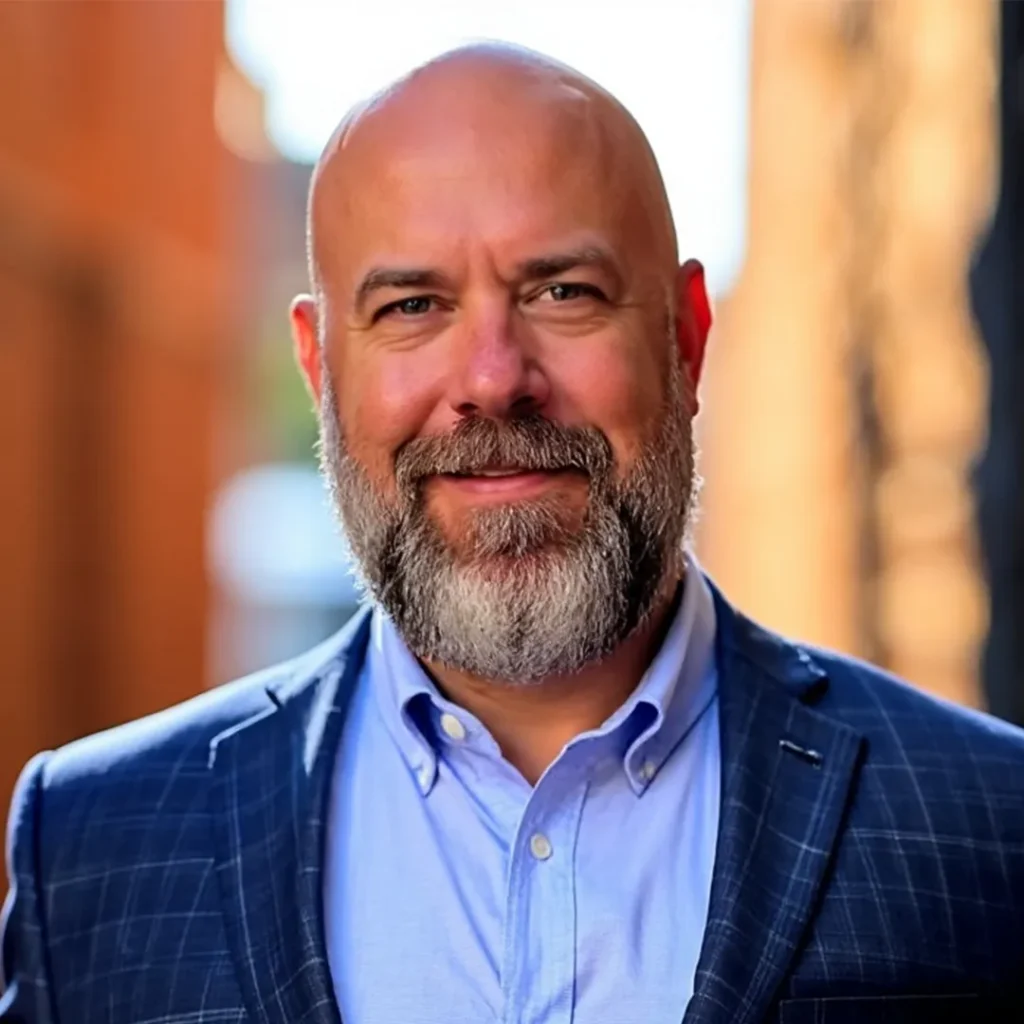
ABOUT THE AUTHOR
Grant Carmichael
Founder & Chief Strategist, EVANCED · MBA, CISSP, GCSA · Google Certified Partner
Grant has spent 20+ years at the intersection of technology and marketing — helping financial advisors turn their digital presence into a real growth engine. Before founding EVANCED, he held senior roles at Ernst & Young, Northside Hospital, and Floyd Medical Center. Today he leads a team that specializes in brand messaging, high-converting websites, and data-driven marketing for advisory firms. His work has been featured at the Kitces Marketing Summit.