Why Order Matters More Than Tactics
Financial advisors come to us with SEO questions all the time. “Should I be blogging?” “Do I need more backlinks?” “Why isn’t my Google Business Profile ranking?” These are legitimate questions. But they’re being asked out of sequence — like asking whether to paint the walls before the foundation is poured.
SEO for financial advisors isn’t a checklist you can attack in any order. Each step depends on the one before it. Running ads to a website that doesn’t convert wastes ad spend. Building content before fixing your local signals buries it. Getting to page one for the wrong keyword sends you the wrong prospects.
Here is the order. Follow it and each step amplifies the next. Skip ahead and you’re building on sand.
"Every advisor who tells us 'SEO didn't work for me' did the right things in the wrong order. The tactics weren't wrong. The sequence was."
— Grant Carmichael, EVANCED
Before you touch a keyword, a page, or a Google profile, you need to know who you’re talking to and what you’re saying to them. This is brand messaging — your ideal client profile, your value proposition, your positioning against other advisors in your market.
Without clear messaging, your SEO attracts the wrong people. You rank for “financial advisor near me” and get calls from people looking for a $50/hour budget planner when you work with business owners selling companies. Every other step in this list gets amplified or diluted by the quality of your messaging.
Your website copy, your GBP description, your blog content — it all flows from your message. Get this wrong and you’re optimizing a broken signal at every subsequent step.
Your website is where every SEO effort ultimately lands. If it’s slow, mobile-unfriendly, generically worded, or buries the contact form — everything you build on top of it leaks. Traffic comes in and nothing happens. You conclude SEO doesn’t work. The website was the problem.
This step means technical SEO basics (page speed, mobile responsiveness, proper title tags, schema markup), but equally important is the conversion architecture — a clear value statement above the fold, social proof, a specific CTA, and a contact experience that doesn’t feel like filing a tax return.
Every step that follows — local, social, ads, content — drives traffic to this page. If the page doesn’t convert, you’re pouring effort into a leaky bucket. Fix the bucket first.
For most financial advisors, the highest-value search traffic is local. “Financial advisor [city].” “Retirement planner near me.” “Fee-only advisor [state].” These searches have high commercial intent — the person is actively looking to hire someone. Your Google Business Profile is how you show up for them.
Local SEO means a fully optimized GBP (every field completed, services listed, photos added), a consistent review acquisition strategy, local citations cleaned up across directories, and location-specific content on your website. If you have 200 five-star reviews and a competitor has 12, the search results are not going to be close.
Local search is the fastest path to qualified inbound leads. It’s also the most durable — once you build local authority, it compounds. Establish this before content or paid search.
Social media for financial advisors isn’t about going viral on TikTok. It’s about being findable, credible, and consistent across the platforms your prospects use to vet you. When someone finds you via Google, they often check LinkedIn next. What they see there either confirms or undercuts the impression your website made.
This step means a complete, professionally written LinkedIn profile, consistent NAP (name, address, phone) across social platforms, and basic content activity that demonstrates you’re active and knowledgeable. As part of a multi-channel strategy, social signals also contribute to overall domain authority.
Social presence amplifies your local and website credibility — prospects research you across platforms before they call. But it’s a poor use of time to build social before the website and local presence are solid.
This is where paid search enters the sequence — not at step one, where most advisors put it. By step five, you have clear messaging, a converting website, strong local presence, and a credibility footprint. Now the ads you run land on a page that converts, are backed by a profile with reviews, and are targeted to the specific client you actually want.
In-market search ads (Google Search, Performance Max with proper conversion signals) are the gas pedal. They work best when the engine is already built. Running them before steps one through four is like pressing the gas before you’ve assembled the car.
Ads are scalable and fast — but they amplify whatever is downstream. A great ad pointing to a weak page wastes every dollar. By step five, the downstream is ready.
Not every prospect who finds you is ready to book a call today. A significant portion are researching — comparing options, thinking about timing, not quite convinced yet. Funnels are how you stay in the conversation with those people without requiring them to take a big commitment step immediately.
This means lead magnets (a guide, a checklist, a webinar) that trade value for an email address, followed by an automated email nurture sequence that builds trust over time. It also means remarketing ads that re-engage visitors who didn’t convert on their first visit. The EVANCED Marketing Platform ties these sequences together so nothing falls through the cracks.
You need traffic before you can build funnels worth optimizing. Steps one through five deliver the volume. Step six captures the value that would otherwise walk out the door.
This is the stage most advisors want to start with — writing blog posts, creating YouTube videos, getting podcast appearances. It’s not wrong. It’s just expensive to do when the rest of the infrastructure isn’t ready to capture and convert the audience you build.
Awareness content — well-researched SEO-optimized articles, thought leadership on LinkedIn, educational video — compounds over time. A blog post written today can drive organic traffic for years. But it drives traffic to your website, which needs to convert. To your local profile, which needs reviews. Into funnels, which need to be set up. The content is the fuel; the infrastructure is the engine.
Not because it’s least important — it’s actually one of the highest-ROI long-term investments you can make. But its ROI depends entirely on the infrastructure it feeds into. Build the infrastructure first, then pour the fuel.
Where Are You in the Sequence?
The honest answer for most advisors: somewhere in the middle, with gaps below. They started running ads before the website was converting. They’re writing blog content before local SEO is solid. They’ve been doing “some social media” without a clear message behind it.
None of that is fatal. But it means effort is being spent on steps that can’t fully pay off until the foundational ones are addressed. The audit question is simple: which is the lowest-numbered step that isn’t solid? Start there. Everything above it gets more efficient the moment you do.
- Step 1: Can you describe your ideal client in one sentence and your key differentiator in one sentence?
- Step 2: Does your website load in under 3 seconds on mobile? Does it have a clear CTA above the fold?
- Step 3: Is your GBP fully completed with 20+ reviews and recent photos?
- Step 4: Is your LinkedIn profile complete with a professional headline, about section, and recent activity?
- Step 5: Do your ads have conversion tracking installed and are they sending to a dedicated landing page?
- Step 6: Do you have at least one lead magnet and a follow-up email sequence?
- Step 7: Are you publishing at least two SEO-optimized blog posts per month on topics your ideal clients are searching for?
"Most advisors are doing step seven work while skipping step two. Fix the foundation. Then the content you create actually goes somewhere."
— Grant Carmichael, EVANCED
If you want a straight read on where you are in the sequence and what to tackle next, that’s exactly the conversation we have in a fractional CMO engagement. We audit the full stack, identify the lowest-numbered gap, and build a roadmap that isn’t just “do more SEO.” It’s a prioritized sequence with each step building on the last.
ABOUT THE AUTHOR
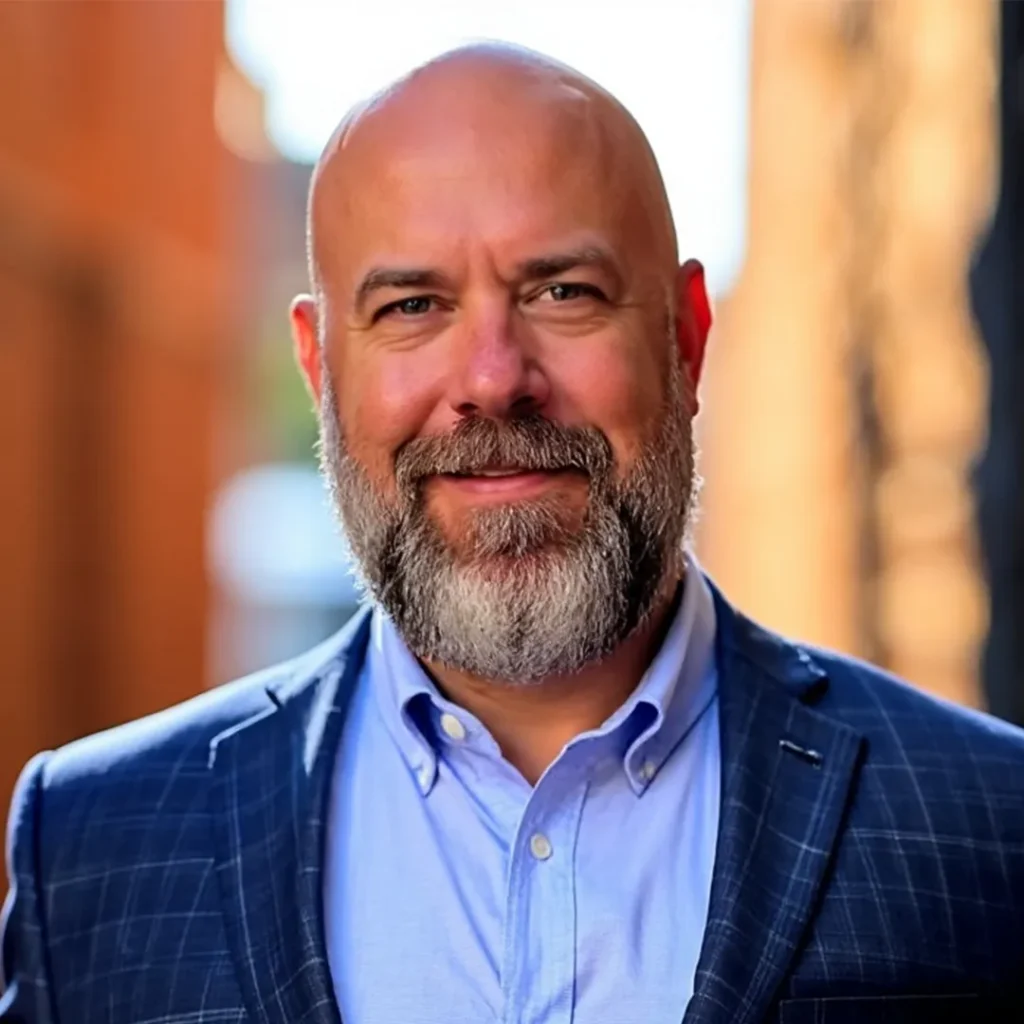
Grant Carmichael
Founder & Chief Strategist, EVANCED · MBA, CISSP, GCSA · Google Certified Partner
Grant has spent 20+ years at the intersection of technology and marketing — helping financial advisors turn their digital presence into a real growth engine. Before founding EVANCED, he held senior roles at Ernst & Young, Northside Hospital, and Floyd Medical Center. Today he leads a team that specializes in brand messaging, high-converting websites, and data-driven marketing for advisory firms. His work has been featured at the Kitces Marketing Summit.
Find Out Which Step Is Your Bottleneck
A single conversation can identify where your SEO sequence is broken and what to fix first. No generic advice. Just a clear next step.