Why Most Advisors Only Work on One Stage
The typical financial advisor marketing conversation goes like this: “I need more clients, so I need more ads.” That’s stage 4 thinking — conversion — applied to a problem that often lives somewhere else entirely. Maybe people can’t find you. Maybe they find you and don’t trust what they see. Maybe existing clients don’t think to refer because no one ever asked.
Running more ads into a broken journey is like pouring water into a leaky bucket. The stages upstream determine whether the ad investment pays off at all. And the stage downstream — advocacy — is where the real compounding happens, yet most advisors do almost nothing intentional there.
Here’s what all five stages actually look like, what breaks at each one, and what to do about it.
"Your best prospects aren't searching for you yet. They're hearing about you from someone they trust, or they're stumbling on your content during a life event that made financial advice suddenly feel urgent. Both are stages you can engineer — if you think about the full journey."
— Grant Carmichael, EVANCED
Awareness is the stage where a future client first encounters your name, your content, or your firm — usually before they’re actively shopping. This could be a Google search on a broad financial topic that surfaces your blog. A LinkedIn post a colleague shares. A podcast appearance. A Google Business Profile showing up in a local search.
Most advisors underinvest here because it doesn’t feel like it’s doing anything. There’s no lead form. No phone call. Just an impression. But without awareness, every other stage is starved. You can’t convert people who have never heard of you.
- What works: SEO-driven content, Google Business Profile optimization, LinkedIn thought leadership, local presence
- What breaks: No content, no local visibility, no reason for anyone to encounter you outside of a direct referral
- Warning sign: All your leads come from referrals alone — that’s not bad, but it means your awareness pipeline is completely dependent on other people’s effort
Findability is what happens when someone already knows roughly what they need and goes looking. “Fee-only financial advisor Atlanta.” “Retirement planner near me.” “Financial advisor for business owners.” If you don’t show up in those searches, you don’t exist to that prospect — even if you’re exactly what they need.
This stage is where technical SEO, local SEO, and paid search intersect. It’s not enough to have a website. It has to rank. Your Google Business Profile has to be complete and reviewed. If you’re running Google Ads, your ads have to show up on the right searches with a landing page that doesn’t immediately lose the click.
- What works: Local SEO, Google Business Profile reviews, targeted search ads, service-area content pages
- What breaks: Thin website, no local signals, targeting too broad or too narrow, no conversion tracking
- Warning sign: Your website gets traffic but almost no leads — findability is working, but something downstream is broken
Here’s the thing about reputation: the prospect has already found you. They’re on your website. They’re reading your bio. They’re checking your Google reviews. And they’re making a decision — often in under 60 seconds — about whether you’re someone they could trust with their financial life.
This is the stage most advisors lose without ever knowing it. No one calls to say “I looked you up and decided not to reach out.” They just don’t reach out. Your reviews are thin. Your website looks outdated. Your bio sounds like a compliance form. The prospect moves on to the next result.
- What works: Consistent Google reviews (with responses), a professional website with clear value proposition, brand messaging that speaks to a specific client type, credentials prominently displayed
- What breaks: Old or absent reviews, generic messaging, no social proof above the fold, slow or mobile-unfriendly site
- Warning sign: High traffic, low inquiry rate — reputation is likely the leak
Conversion is the moment a visitor becomes a lead — they fill out a contact form, call your office, book an intro meeting, or download your planning guide. This is the stage that gets the most attention and the most budget. It’s also the stage where advisors panic and make the wrong changes when results are slow.
The conversion stage depends entirely on the three stages before it. If awareness is thin, you don’t have enough prospects entering the funnel. If findability is broken, the wrong people are showing up. If reputation is shaky, they leave before they ever reach the form. Optimizing the form when the problem is the review profile is the wrong fix.
- What works: Clear, low-friction CTA, specific offer (intro call, financial plan review, guide download), conversion tracking, fast mobile experience
- What breaks: Buried contact form, generic “schedule a call” with no context on what happens next, no tracking so you can’t measure what’s working
- Warning sign: You keep changing your ads and landing pages but leads don’t improve — the problem is probably stages 1–3
Advocacy is what happens when an existing client is so satisfied — and so reminded of your value — that they actively refer friends, family, and colleagues. It’s the referral engine. And unlike the first four stages, it doesn’t require ad spend. The ROI is extraordinary. The problem is that most advisors leave it entirely to chance.
“My clients refer me” is not an advocacy strategy. It’s luck. A real advocacy strategy includes regular touchpoints that remind clients of your value, makes it easy and natural to refer, and occasionally asks directly. The email nurture sequence is one of the most underused tools here — a monthly newsletter that stays top of mind costs almost nothing and keeps your name in the conversation when someone at the dinner table mentions they need a financial advisor.
- What works: Regular email communication, client events, referral asks built into service milestones, easy referral mechanism (a page, a form, a simple ask)
- What breaks: Radio silence between annual reviews, no system for staying top of mind, awkward or absent referral process
- Warning sign: You have 100+ happy clients but fewer than 10 referred someone in the last year — advocacy is leaking
The Audit: Where Is Your Journey Breaking Down?
You don’t need to fix all five stages at once. You need to find the one that’s leaking the most and fix that first. Here’s how to spot it fast:
- Few or no inbound leads at all? Awareness and Findability need work. Start with local SEO and Google Business Profile.
- Traffic but no calls or form fills? Reputation or Conversion is the issue. Check your reviews, your website copy, and your CTA placement.
- Leads but low close rate? Conversion quality or intake process. Who are you attracting and is your offer matching their need?
- Good clients but slow referral growth? Advocacy is the gap. Start a monthly email, build a simple referral ask into your onboarding or annual review.
- Not sure? The EVANCED Marketing Platform tracks your pipeline across all stages so you can see exactly where prospects are dropping out.
"The most expensive thing in financial advisor marketing isn't a failed ad campaign. It's a client who would have referred you to three people if you'd just stayed in touch."
— Grant Carmichael, EVANCED
How the Stages Connect to Your Marketing Spend
The journey model changes how you think about budget allocation. When you see the whole picture, you stop asking “should I run Google Ads?” and start asking “which stage is my biggest bottleneck, and what’s the most efficient way to fix it?”
Sometimes the answer is ads. Sometimes it’s a website rebuild. Sometimes it’s six months of email nurture for a dormant list. Our job at EVANCED — across every channel we manage — is to match the investment to the actual constraint, not just the most obvious one.
If you want a straight read on where your journey is breaking and what to prioritize, that’s exactly the kind of conversation we have in a fractional CMO engagement. No guessing. Just a clear map and a prioritized action list.
ABOUT THE AUTHOR
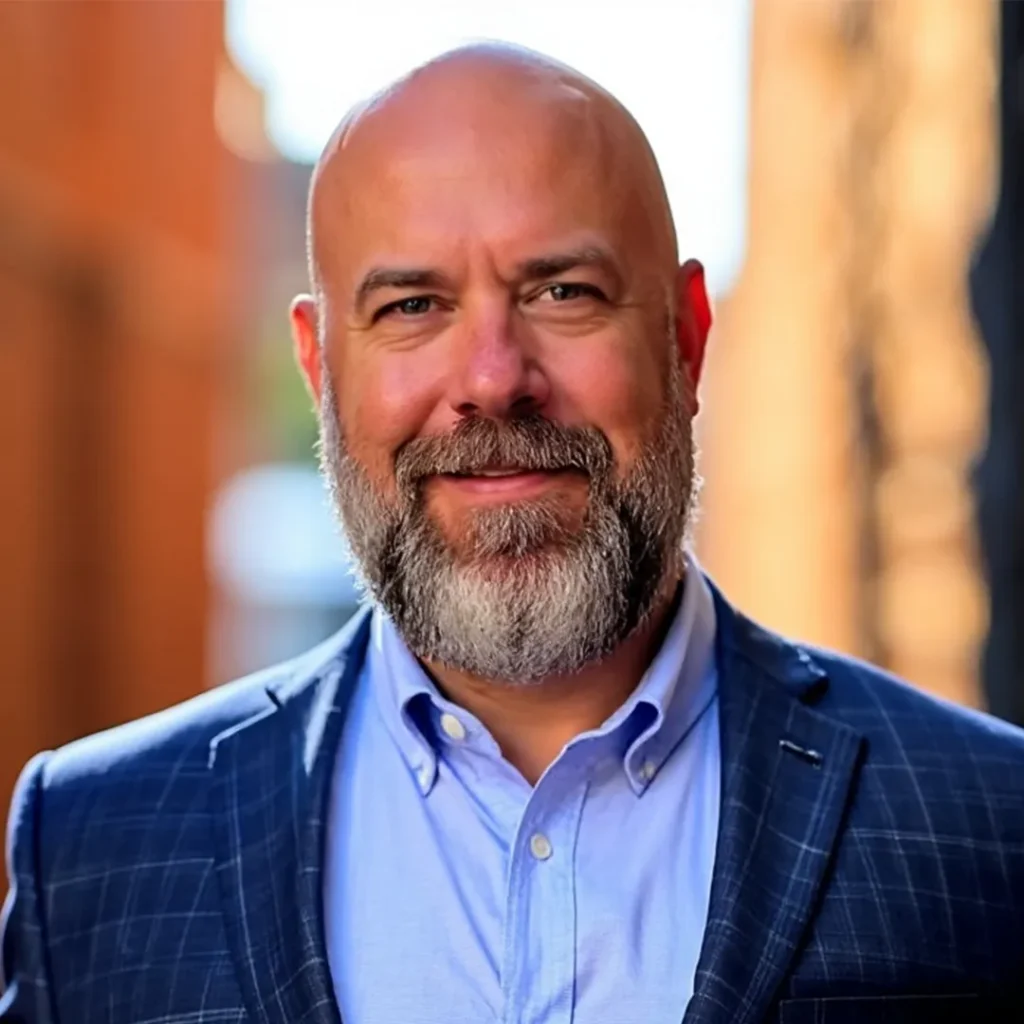
Grant Carmichael
Founder & Chief Strategist, EVANCED · MBA, CISSP, GCSA · Google Certified Partner
Grant has spent 20+ years at the intersection of technology and marketing — helping financial advisors turn their digital presence into a real growth engine. Before founding EVANCED, he held senior roles at Ernst & Young, Northside Hospital, and Floyd Medical Center. Today he leads a team that specializes in brand messaging, high-converting websites, and data-driven marketing for advisory firms. His work has been featured at the Kitces Marketing Summit.
Find Out Where Your Journey Is Leaking
A 30-minute conversation can identify which of the five stages is costing you the most clients right now. Let’s look at the map together.